
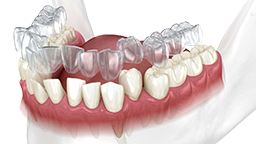
When patients ask whether they have to wear braces or can do Invisalign, the answer is never the same. It depends on the case, the person and, above all, on what we're trying to achieve. Here we walk through the criteria we use in clinic, with four real cases.
What they have in common
Both Invisalign and traditional braces are orthodontic tools: they apply controlled forces on teeth to move them to a more functional, aesthetic position. The biology is the same; the medium changes. The choice between one and the other is rarely medical: in 80% of cases it’s a conversation about lifestyle, budget and discipline.
When we recommend Invisalign
Invisalign shines on mild to moderate crowding, spacing, relapses from childhood orthodontics and incisor rotations. It’s the usual choice for working adults who need a discreet solution and for patients with impeccable hygiene. It demands discipline: 22 hours a day, off only to eat and brush.
When braces are still the answer
Braces remain the most predictable option in severe deep bites, surgical-orthodontic cases and demanding vertical or extrusion movements. Also for teens with low compliance: the appliance is always on, no chance of leaving it at home.
The four cases
Case 1 — Patricia, 32: moderate anterior crowding. Invisalign, 14 months. Case 2 — Diego, 14: lateral cross-bite. Braces, 22 months. Case 3 — María, 47: relapse after childhood orthodontics. Invisalign Lite, 6 months. Case 4 — Pablo, 17: severe crowding with extractions. Braces, 28 months. Four patients, four different paths. The conclusion is always the same: the best appliance is the one the patient will actually wear.
How we decide at Odonlab
At the first visit we do an intraoral scan, clinical photographs and a panoramic X-ray. With that data we prepare two plans: one with Invisalign, one with braces. We walk you through the pros and cons of each, the estimated months and a sealed quote. The decision is yours, with all the information on the table.